USDCAD open: 1.4018, overnight range 1.3947-1.4029. close 1.4016
USDCAD plunged to 1.3948 from a pre-employment data level of 1.4002. The better-than expected Canadian employment report contributed to the move but the far-weaker-than-expected US nonfarm payrolls report was the main catalyst.
Canada added 75,100 jobs in July (forecast 15,000, previous 18,200) and the unemployment rate ticked down to 6.4% from 6.5%. No matter how you slice it, it’s a stellar report. Growth is coming from the private-sector, rather than government hiring. This data gives the Bank of Canada more reason to stay on the sidelines.
WTI oil traded in a 76.85-78.75 range but is near the bottom of the band in early NY. Traders are hopeful for a resolution to the US and Iran war but shippers are cautious. Only 33 vessels sailed through the Strait of Hormuz this week, compared to 50 last week.
USDCAD Technicals
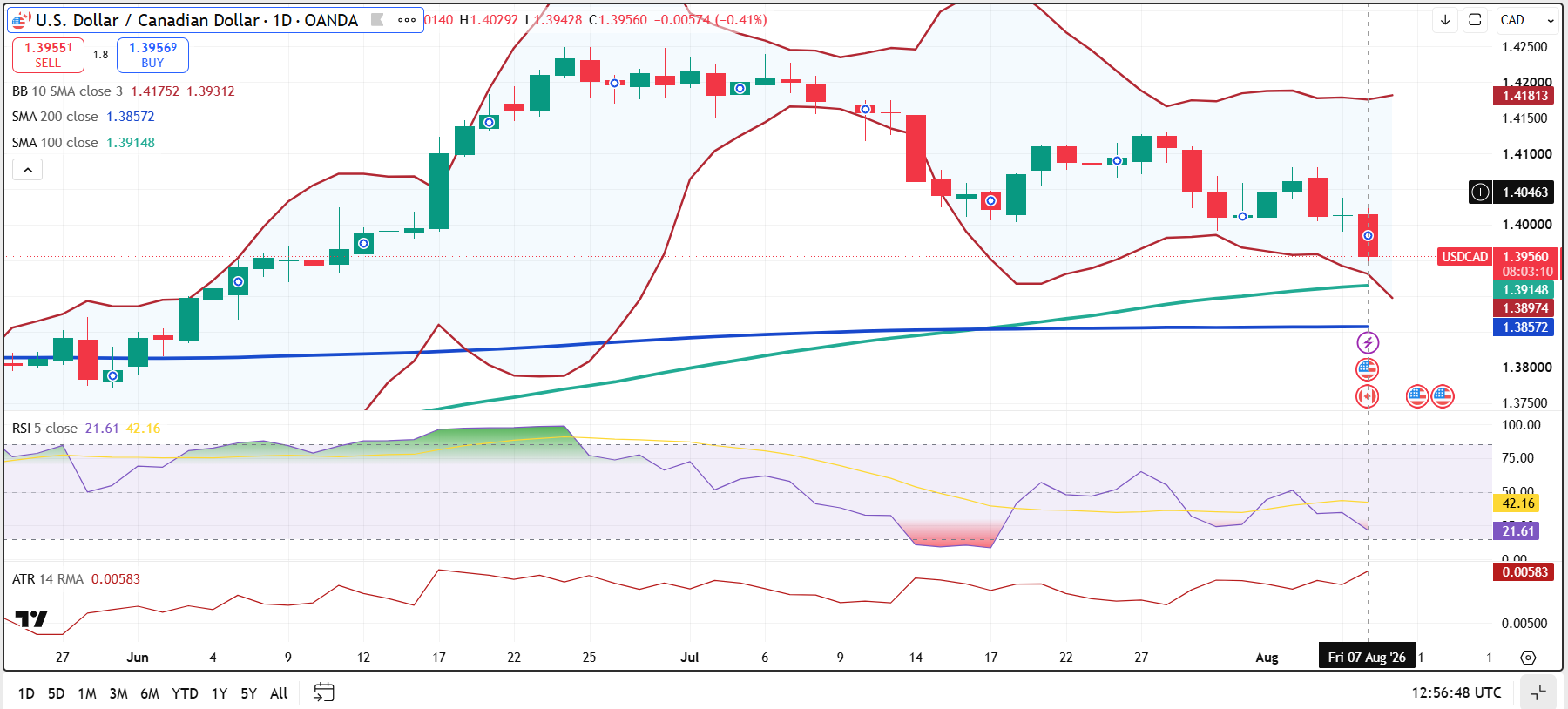
The intraday USDCAD technicals are unchanged from yesterday. They are bearish below 1.4050 with the break below the 1.3990-1.4000 support zone risking a deeper slide through the 1.3940 area to extend losses to 1.3910 for a test of 1.3960. A decisive break above 1.4020 suggests a retest of 1.4050.
Longer term, USDCAD is bearish below 1.4050 with the break below support at 1.3990 targeting the 100-day moving average at 1.3914 which is guarding the 200-day ma at 1.3857.. It should be tough sledding due to as momentum indicators suggest USDCAD selling is at or near extreme oversold levels.
For today, USDCAD support is at 1.3940 and 1.3910. Resistance is at 1.4010 and 1.4040.
Today’s expected range is 1.3940-1.4020
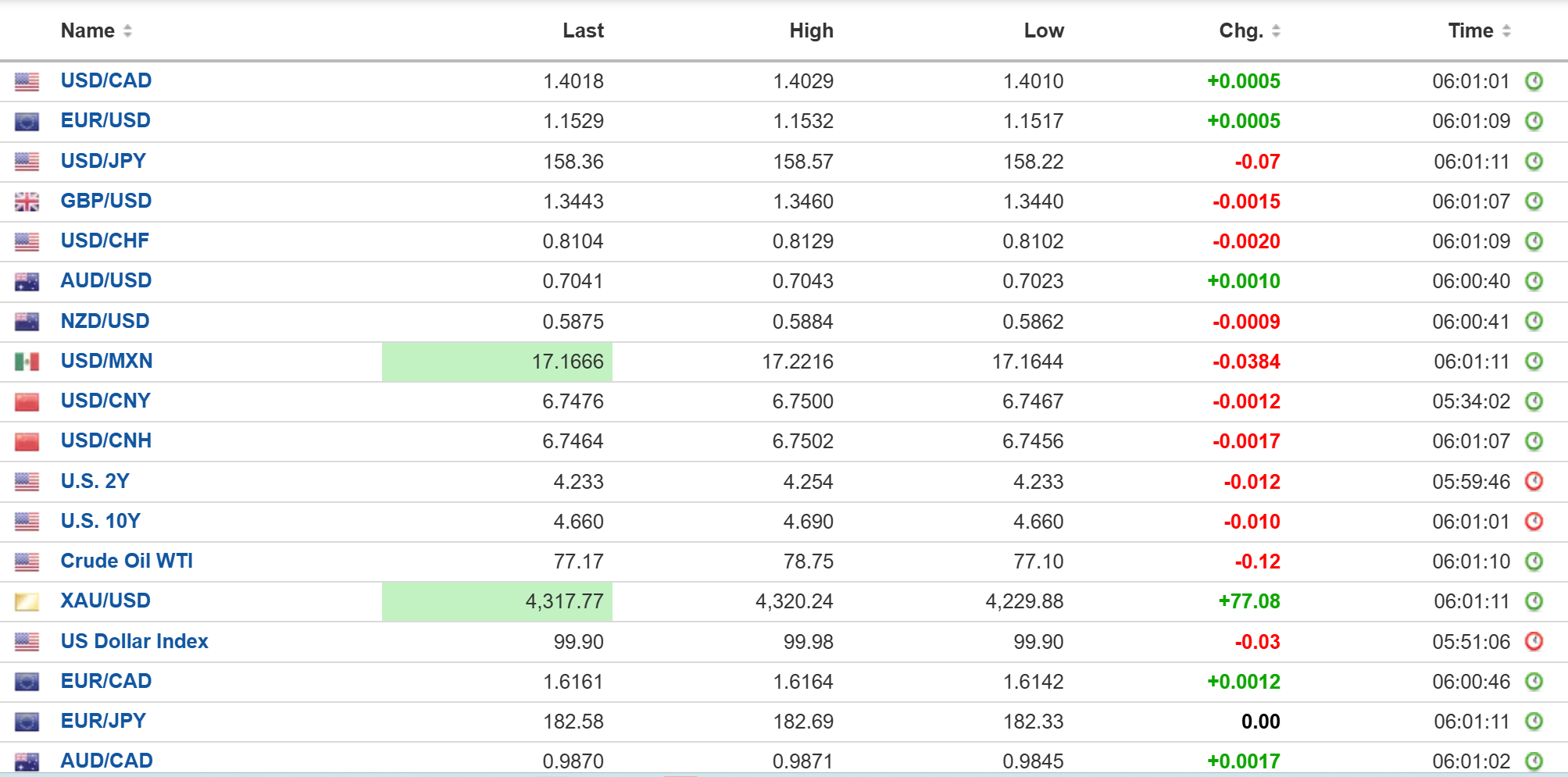
FX Heat Map
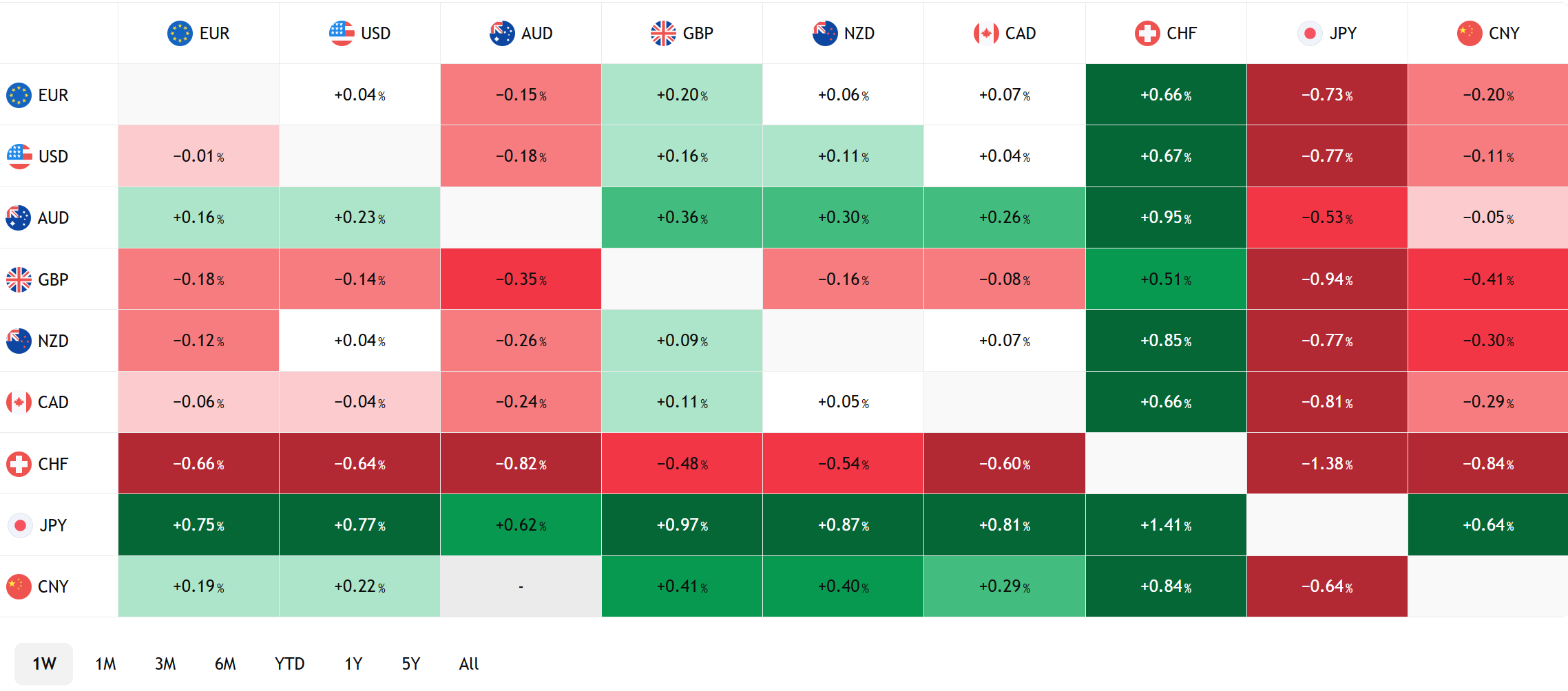
FX open high low 6:00 am
NFP Surprise
US payrolls unexpectedly fell by 23,000 in July, but the real shock came from the revisions. May and June employment gains were slashed by a combined 103,000 jobs, confirming the labour market has been losing momentum for months rather than suffering a one-month stumble.
The weakness was broad-based, with losses in retail, financial services and local government education, while healthcare remained the only meaningful source of job growth. At the same time, temporary layoffs surged and labour force participation continued to decline, suggesting the steady 4.1% unemployment rate paints a healthier picture than reality.
Fed Chair Kevin Warsh will not be unhappy. The report strengthens the case for lower US interest rates. A deteriorating employment backdrop gives FOMC doves fresh ammunition and increases the likelihood markets will fully price in a September rate cut.
The odds for a rate hike in September dropped from 55% to 40%.
Taking Stock
In Asia, Japan’s Topix closed with a gain of 0.47%, Hong Kong’s Hang Seng finished up 0.54% while Australia’s ASX 200 finished flat.
As of 6:00 am PT, European bourses climbed further post NFP data. The German Dax has risen 1.14%, the French CAC-40 has gained 0.52%, and the UK FTSE 100 is up 0.72%. S&P 500 futures are up 0.55%, the 10-year Treasury yield is 4.623%, the DXY is 99.44 and gold is $4,348.45.
EURUSD | Range 1.1517-1.1581
EURUSD reversed its pre NFP slide and rallied to the top of its range after the better-than-expected US employment numbers. Earlier, Germany’s trade surplus narrowed to €15.4 billion from €19.4 billion which was not much of an event for FX.
GBPUSD | Range 1.3436-1.3508
Sterling traded surged in the wake of the US jobs report and is at its session high. The lowered risk of a Fed rate hike ahead fueled the gains.
USDJPY | Range 156.68-158.27
USDJPY erased all of its overnight gains and then some following the US employment data which sharply reduced bets for a September rate hike.
AUDUSD | Range 0.7023-0.7078
AUDUSD traded sideways in an uneventful session then spiked to the peak after the US data. Traders are also looking ahead to Tuesday’s RBA decision. No change in rates is expected.
USDMXN | Range 17.0929-17.2216
USDMXN plunged after the US jobs data which exacerbated earlier losses following the Banxico decision to leave rates unchanged. The decision was expected but the surprise came when policymakers pushed out their timeline for inflation to hit target to Q4 rather than Q2 2027.
CHINA
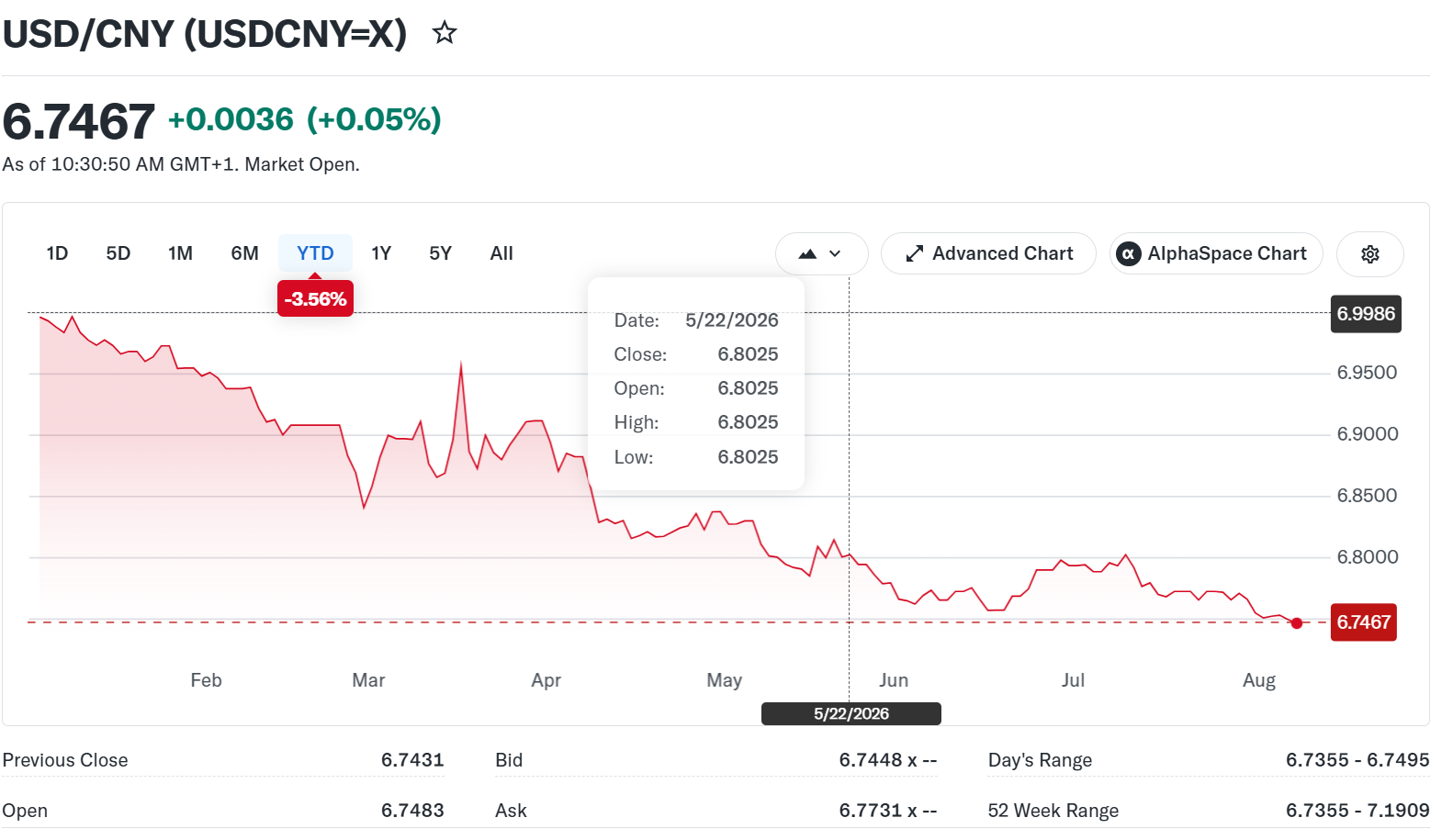
- PBoC Fix: 6.7904 vs exp. 6.7548 (prev. 6.7895)
- Shanghai Shenzhen CSI 300 rose 0.93% to 4,694.44
China’s Trade surplus was $112.5 billion in July, compared with $125.62.b in June but higher than the forecast for a $107.b increase. The data suggests that China’s economy continues to grow, but that the growth is driven by the state and not consumers.
Sources: Investing.com, Bloomberg, Reuters, Yahoo Finance, US Census Bureau, Trading Economics, Tradingview