USDCAD open: 1.3803, range Mon-Tues.1.3776-1.3844, close Fri. 1.3838, Mon. 1.3814
USDCAD traded defensively after a fresh round of US and Iran attacks drove a surge in oil prices, albeit in holiday thinned markets.
Today is the day the elbows went up. Prime Minister Mark Carney retaliation to Trump’s 50% tariffs on Canadian goods went into effect today at 12:01 am with matching dollar-for-dollar tariffs on US imports. Four of five Canadians support the action according to a Nanos poll, although those losing their jobs are not likely in the 4.
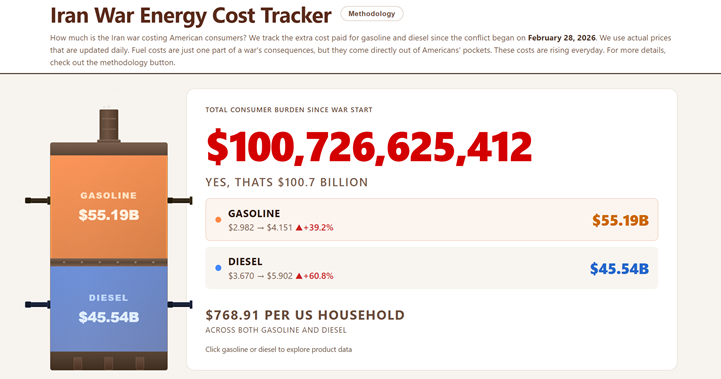
Americans will be hurting too, and that is in addition to the pain they feel at the gas pumps which the Watson School of International and Public Affairs calculate is $100.7 billion since Trump and U.S. Army Reserve Major Pete Hegseth’s bungled Iran attack.
Stats Canada reported that the country lost 41,700 jobs which handily missed the forecast for a 15,000 gain while the unemployment rate remained unchanged at 6.4%. Economists chalked up the loss as payback for the robust 75,100 gain in July. The results combined with the trade uncertainty should keep the BoC on hold at its October 28 meeting.
WTI oil prices rose from Friday’s close $90.86 to $90.73 overnight after Iran’s Houthi-proxy attacked a Saudi Arabian energy facility and a Saudi airbase, injuring more than 70 people. The move was in retaliation to U.S. attacks on Iran oil tankers on Saturday.
There are no US or Canadian economic reports of note today.
USDCAD Technicals
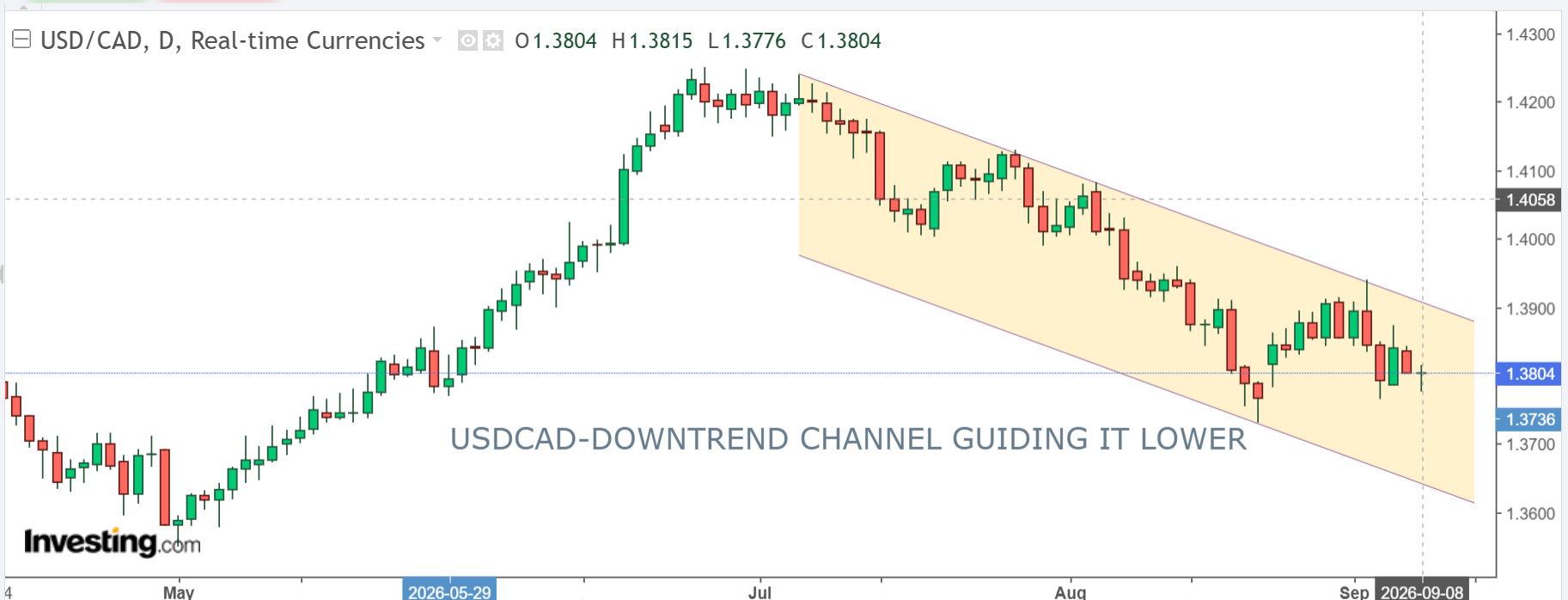
USDCAD is bearish below 1.3850 and is in a downtrend channel with the prices below the 200-day moving average at 1.3836, keeping the near-term bias bearish.
Longer term, USDCAD has already broken the 50 percent Fibonacci retracement of the January-July range (1.3871) and is now pressing on the 61.8 percent level at 1.3780, which lines up almost exactly with the 4-hour lower Bollinger band (1.3781). A close below 1.3770 targets 1.3740. If that level breaks it puts the 78.6 percent retracement at 1.3650 in play.
For today, support is 1.3780 and 1.3740 and resistance is at 1.3840 and 1.3870
Todays Range 1.3770-1.3850.
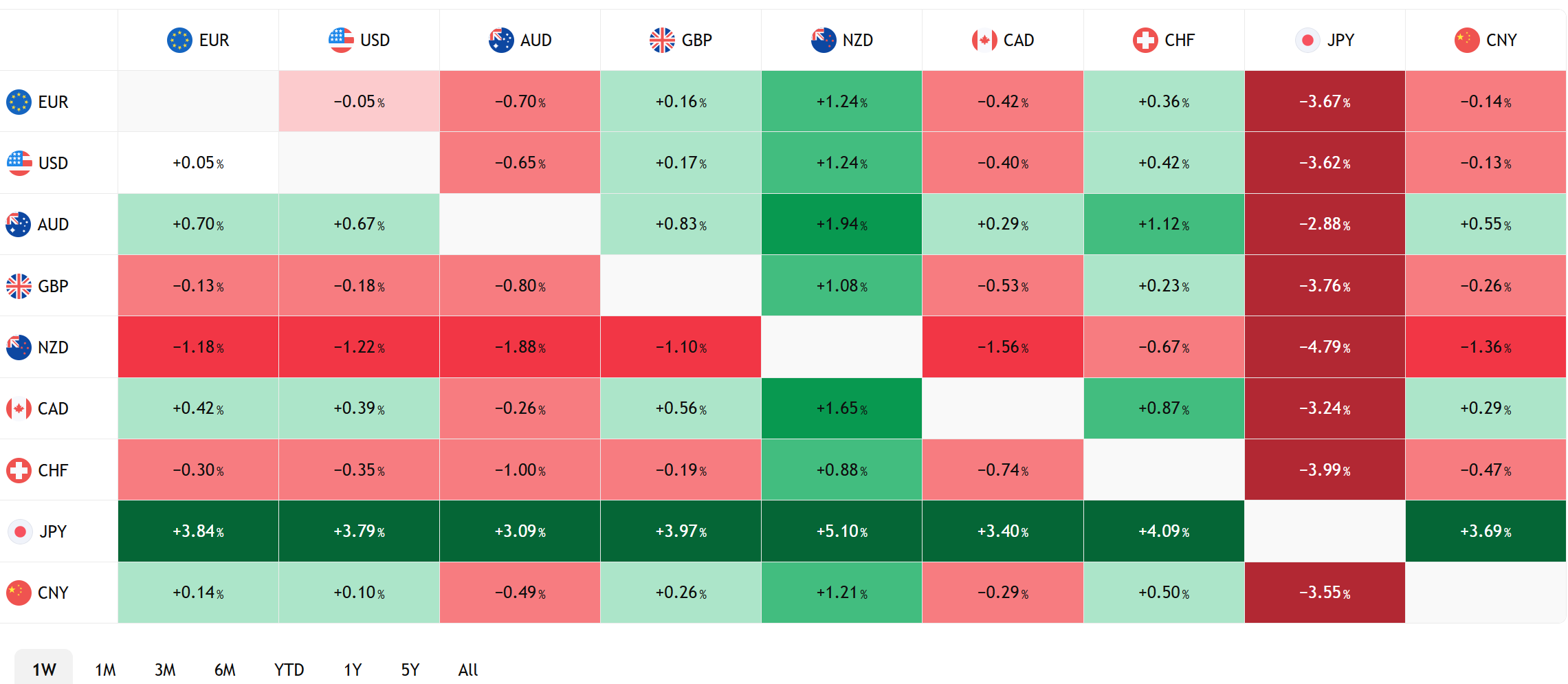
FX Heat Map
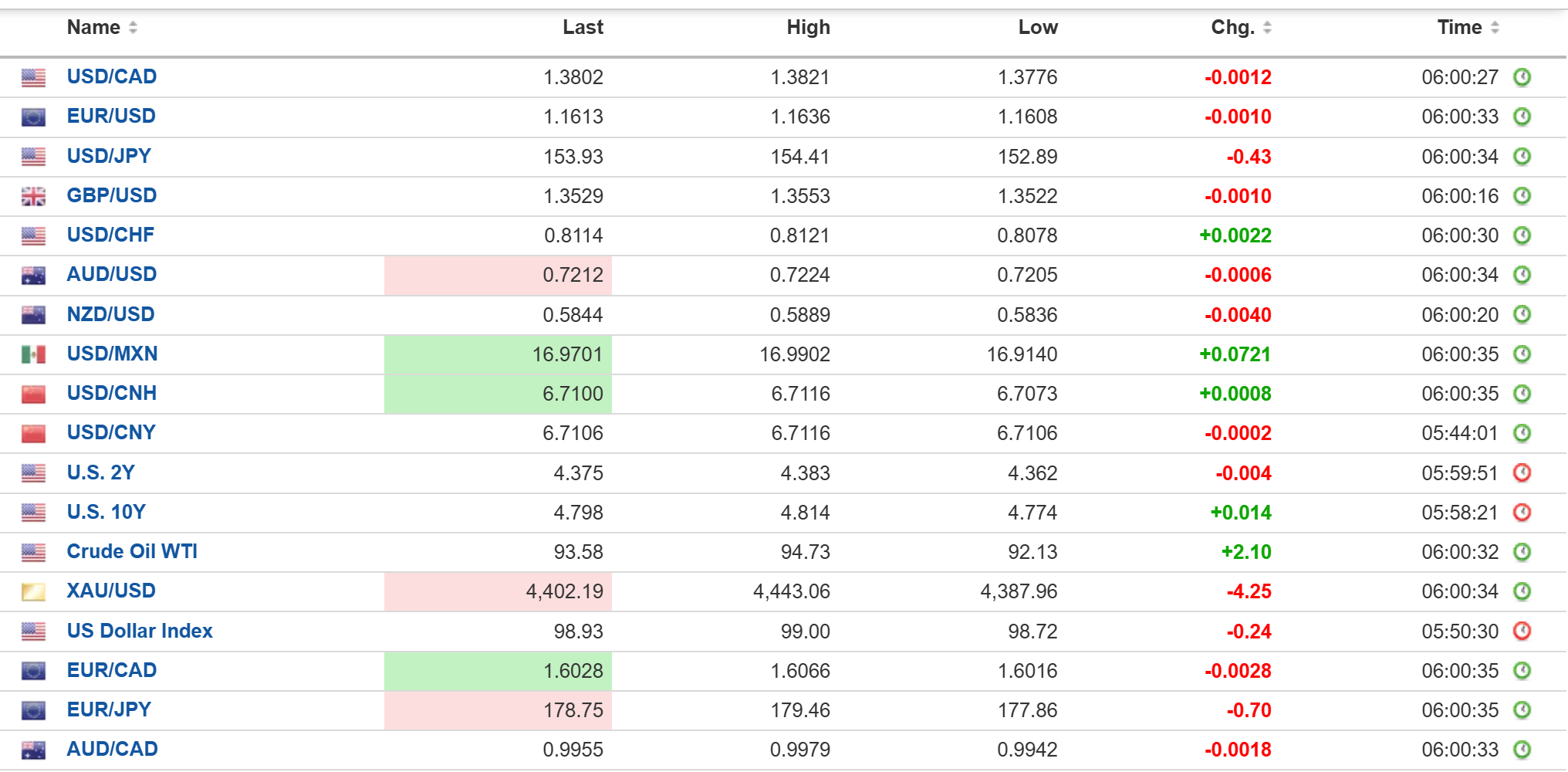
FX open high low 6:00 am
School’s In
It’s the first day of the new school year for many students and a return to fully staffed FX desks. Traders will continue to analyze Friday’s stronger-than-expected US nonfarm payrolls numbers (actual 162,000, forecast 55,000) along with the upward revision to the June and July numbers by 55,000. The results suggested that the Fed need not be in any hurry to cut rates and that policymakers could continue to focus on inflationary concerns from Trump’s tariffs and Trump’s war on Iran.
Trump took credit for the gain, calling it the “Trump Boom”, then threatened, “LOWER THE RATE OR I’LL STOP TRADING WITH COUNTRIES WITH WHICH WE HAVE A DEFICIT.”
That tweet didn’t do anything to inspire confidence in global investors who are already worried about the precarious position of Fed independence against ballooning US government debt, which is over $40 trillion.
Commodity prices are rising and that is exacerbating inflation worries. Trump’s tariff threats have fuelled a surge in copper prices to a new peak and a 17% gain this year.
Taking Stock
Asian equities closed in the red due to escalating geopolitical tensions. Japan’s Topix finished down 1.83%, Australia’s ASX lost 1.09% and the Hang Seng fell 0.38%. As of 7:40 am, European bourses are mostly flat. The German DAX is down 0.17%, while French CAC 40 and the UK FTSE 100 are flat to negative. S&P 500 futures are down 0.28%, the 10-year Treasury yield is 4.803%, the DXY is 98.96 and gold is $4,404.04.
EURUSD | Range 1.1608-1.1636
EURUSD traded with a modest negative bias even after Monday’s upward Q2 growth revision (actual 1.2% y/y vs previous 1.0%) and a jump in the Sentix confidence index to 5.1 from 0.9. The Iran-proxy attack on Saudi Arabia and the ensuing bump in crude prices weighed on the single currency.
GBPUSD | Range 1.3522-1.3553
GBPUSD traded in a narrow band and is near its session low. Recent hawkish comments from Bank of England Chief Economist Huw Pill have increased the odds for two rate hikes before March 2027 and are underpinning the currency pair. Meanwhile, the odds for the Fed tightening this month are only 60%. Gains were hampered by slowing BRC Retail Sales, which rose 0.5% in August compared to 1.0% in July.
USDJPY | Range 152.89-154.41
USDJPY dropped to a seven-month low Monday and extended the losses overnight before recouping all the losses overnight and into the NY session. Traders expect the BoJ to hike rates by 25 bp on September 18 and open the door to another hike before year end. Japan reported that Q2 GDP rose 1.4% annualized compared to expectations for a 1.1% increase.
AUDUSD | Range 0.7206-0.7224
AUDUSD shrugged off weaker than expected consumer and business confidence and consolidated last week’s gains. Rising commodity prices and expectations for an RBA rate hike this month are giving the currency pair a bid tone. The rate hike expectations were reinforced today after RBA Assistant Governor Sarah Hunter warned that rates may need to rise if inflation stays hot.
USDMXN | Range 16.9140-16.9902
USDMXN climbed steadily after hitting 16.8572 on Friday, rising to its session peak just ahead of the NY open. The peso may have also seen support because Trump’s tariff wrath is aimed at Canada, not Mexico.
CHINA
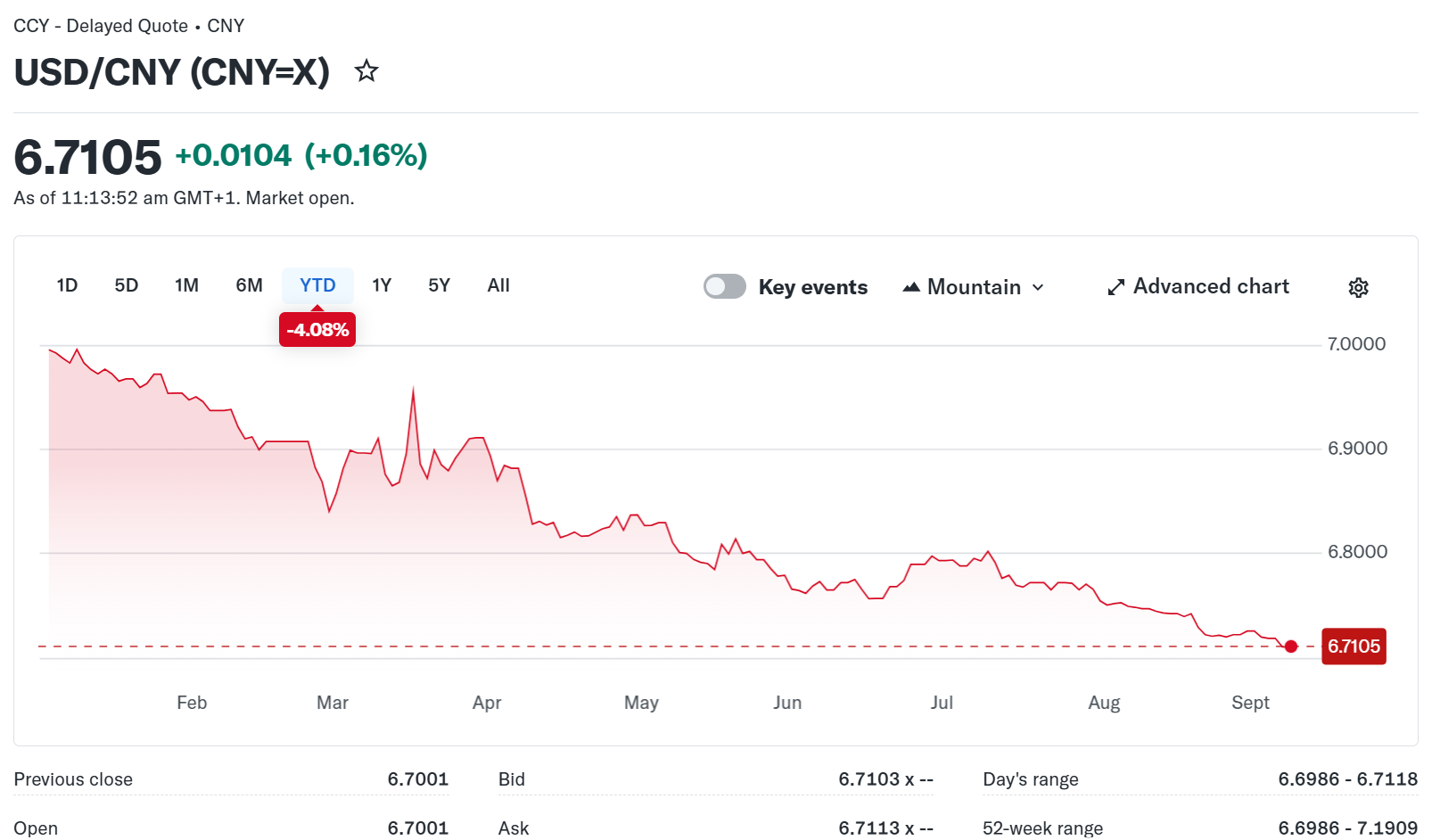
- PBoC Fix: Today: 6.7804 vs Exp. 6.7104 (prev. 6.7795).
- Monday: 6.7795 vs Exp. 6.7086 (prev. 6.7787)
- Shanghai Shenzhen CSI 300 fell 00.36 % to 4,558.74
China’s August Trade surplus rose to $119.09 billion from $112.5 with exports rising 18.6%.
Sources: Investing.com, Bloomberg, Reuters, Yahoo Finance, US Census Bureau, Trading Economics, Tradingview