March 3, 2026
USDCAD open: 1.3700, overnight range 1.3661-1.3722, close 1.3675
The Canadian dollar is the best performing currency overnight. It’s a dubious title as the loonie is still down 0.21% against the greenback, but Canada’s status as an oil country provided the Loonie with some shelter. The Donald J Trump War on Iran is wreaking havoc across global markets mainly because of its disruption to oil supply and partly because the American’s have been unable to articulate a coherent plan as to their objectives.
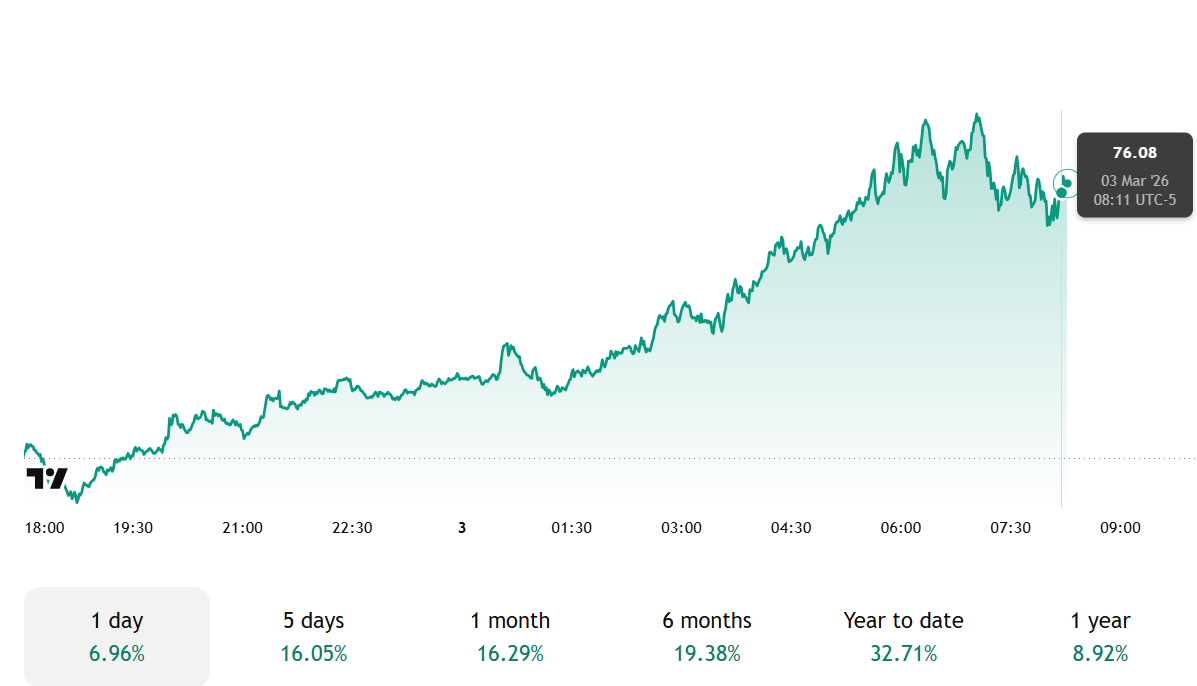
WTI oil prices surged 8.17% since yesterday, rising from 70.56 to77.02 in NY today. Even more dramatic, LNG prices added another 30% to yesterday’s 40% gain after Qatar (the second-largest exporter) closed its terminal. The Republican Guard claim the Strait of Hormuz is closed while US officials say it is not so.
BoC Deputy Gover Sharon warned that policymakers would raise interest rates even if the economy is weak if inflation risks became persistent.
There are no US or Canadian economic reports of note today.
USDCAD Technical Outlook
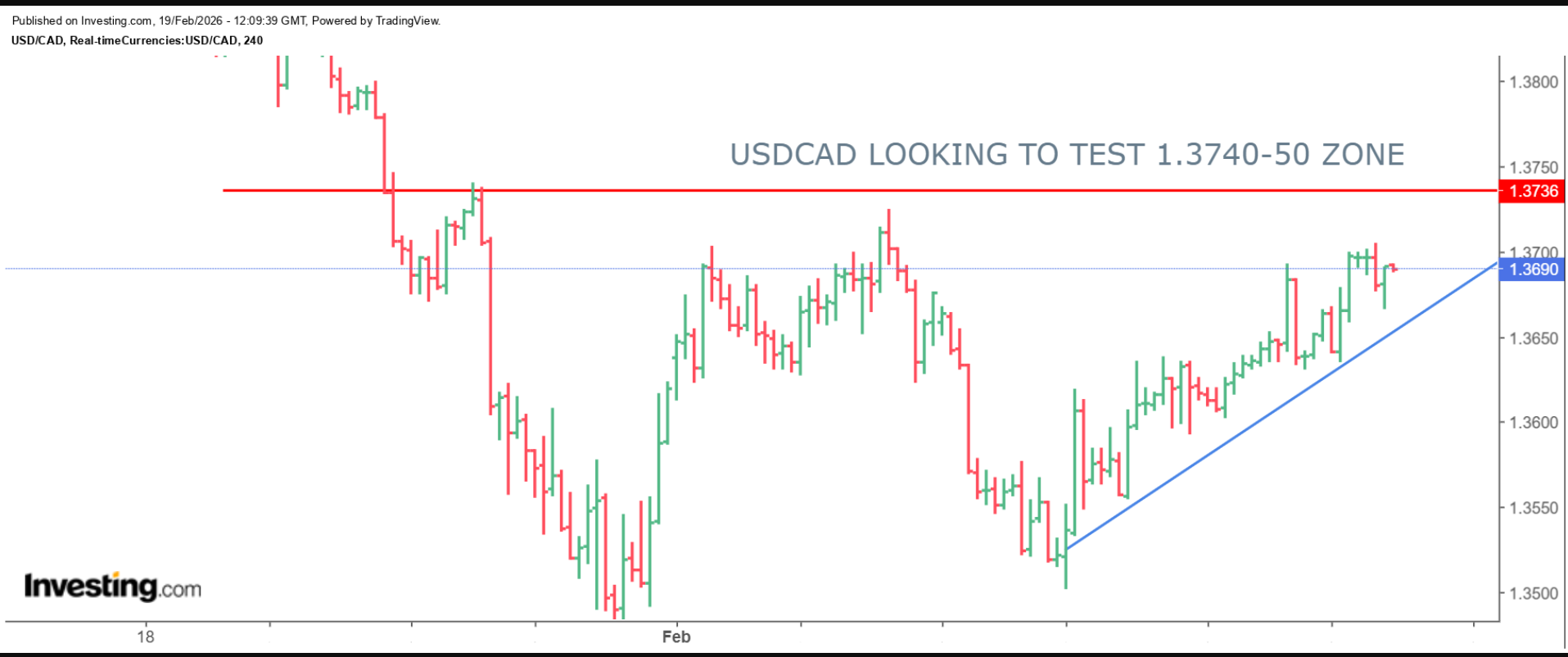
The intraday USDCAD technicals are slightly bid while trading above 1.3680 and looking for a break above 1.3730 to extend gains to 1.3770, then 1.3830. A move below 1.3680 targets 1.3630 then 1.3610.
The medium-term technicals continue to support a bearish bias below the 1.3755-1.3800 area. That suggests the current rally is just a correction. The broad 1.3480-1.3780 band remains intact with a break below 1.3585 putting 1.3500 in play while a sustained break above 1.3800 would argue for a move toward 1.3900.
For today, USDCAD support is at 1.3670 and 1.3630. Resistance is at 1.3730 and 1.3760.
Today’s Range: 1.3640-1.3740
The Donald J Trump War-Day 4
Vladimir Putin invaded Ukraine in February 22 with a plan for a very short (72 hours) to two-week campaign to take over the entire country. Four years later, Putin is still trying. Trump is boasting about a similar outcome for his invasion of Iran.
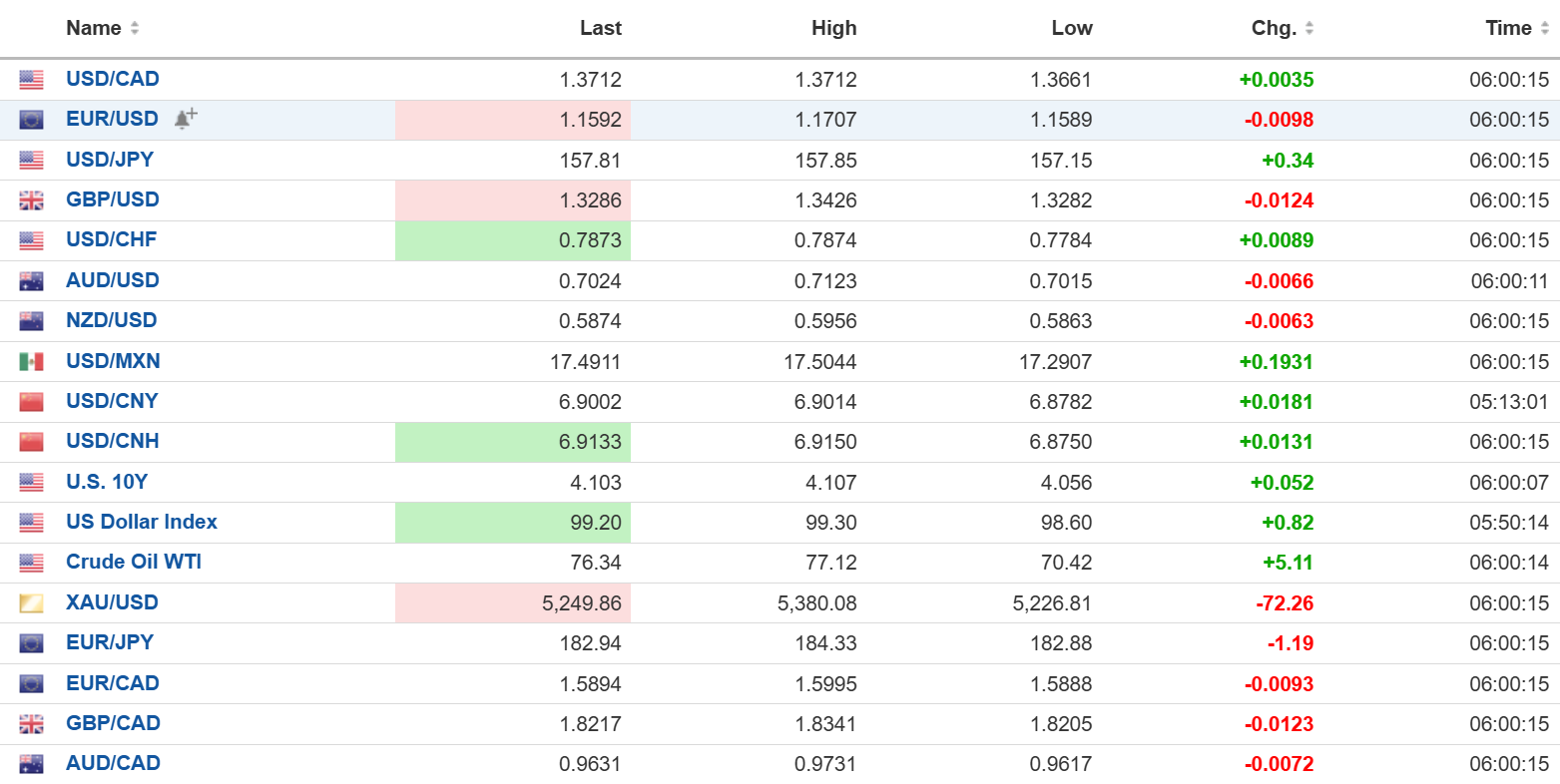
Global markets are in defensive mode. The US dollar index has risen across the board, fueled by safe haven demand and rising oil prices as America is a net exporter of crude. The US dollar index (DXY) rose 0.67% overnight. The 10-year T-yield climbed to 4.104% today from 4.033% yesterday thanks to the surge in the inflation component of the US ISM manufacturing index, which hit a 42-month high. The news supports the Fed’s view that sticky inflation suggests rates should be left unchanged.
Taking Stock
Asian equity markets fell sharply overnight. Japan’s Topix plunged 3.24%, with the drop exacerbated by rising crude prices. Hong Kong’s Hang Seng fell 1.12%, and Australia’s ASX dropped 1.34%.
As of 5:30 am PT, European bourses are a sea of red. The German DAX is down 3.50%, followed by a 2.88% drop in the French CAC 40 and a 2.74% loss in the UK FTSE 100. The DXY soared from 97.87 yesterday to 99.15 in NY. The 10-year Treasury yield is 4.096%, and gold (XAUUSD) is 5,170.33
EURUSD
EURUSD traded poorly, falling from 1.1707 to 1.1582, where it sits in early NY trading. The single currency’s woes are twofold. The first is the rise in US Treasury yields, exacerbating demand for dollars due to interest rate differentials between the eurozone and the US. The second is the risk that higher oil prices spark another bout of inflation. Inflation was front and centre this morning when February Core HICP rose 2.4% y/y compared to expectations for a 2.2% rise. EURUSD could drop to 1.1460 on a move below 1.1540.
GBPUSD
GBPUSD plunged to 1.3263 from 1.3426 on a wave of risk aversion stemming from inflation risks and higher oil prices, which crushed the stock market. Traders are worried that a prolonged or expanded Middle East conflict would choke off global economic growth and reboot inflation. A move below 1.3270 targets 1.3200, then 1.3160.
USDJPY
USDJPY traded with a bid in a 157.15–157.97 range due to broad US dollar demand, soaring oil prices, and higher US Treasury yields. However, traders are cautious above 158.00 in case it triggers BoJ FX intervention. Japan’s unemployment rate rose to 2.7% y/y from 2.6% previously.
AUDUSD
AUDUSD traded negatively in a 0.7008–0.7123 range and is at the bottom of that range in NY. The Aussie dollar is suffering from risk aversion due to broad US dollar demand and a tumbling stock market. Aussie building permits fell 7.2% in January (forecast 5.5%). Traders also ignored comments by RBA Governor Michele Bullock, who warned that interest rates could rise in March if inflation expectations increased.
USDMXN
USDMXN rallied in a 17.2907-17.5463 range due to the Middle East war, ongoing trade and tariff concerns and the prospect of steady to higher US interest rates for longer.
China
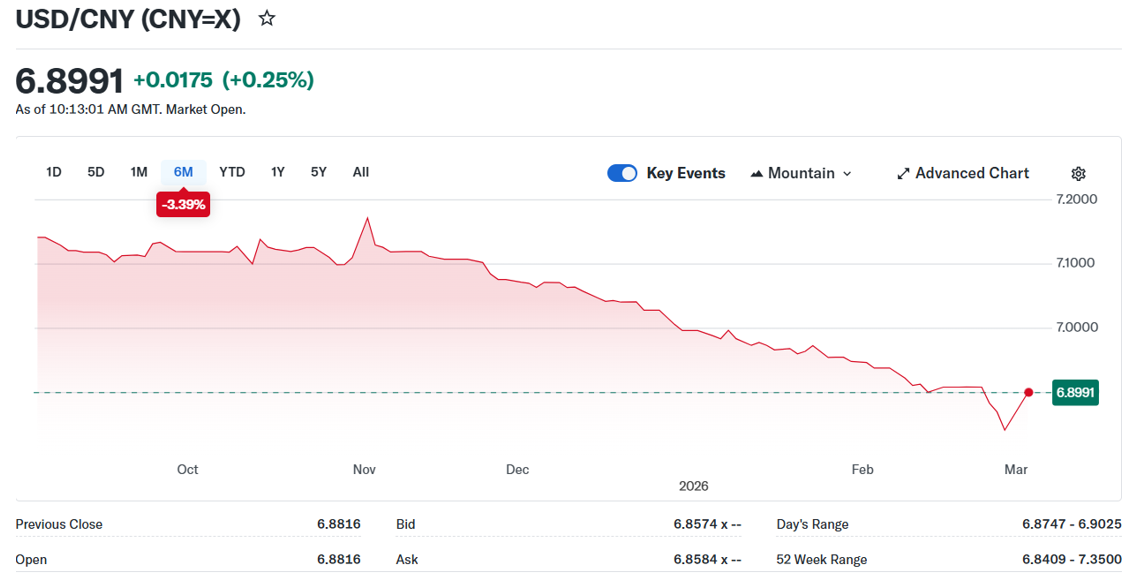
USDCNY Fix: 6.9088 vs exp. 6.8816 (Prev. 6.9236)
Shanghai Shenzhen CSI 300 fell 1.54% to 4,655.90
The annual “Two Sessions” meetings are this week. President Xi Jinping and his deputies will tell thousands of delegates what their economic and fiscal targets will be. The leaders are expected to finalize the “Five-year plan” as well which is expected to include a a section on tech self—sufficiency.
FX open high low
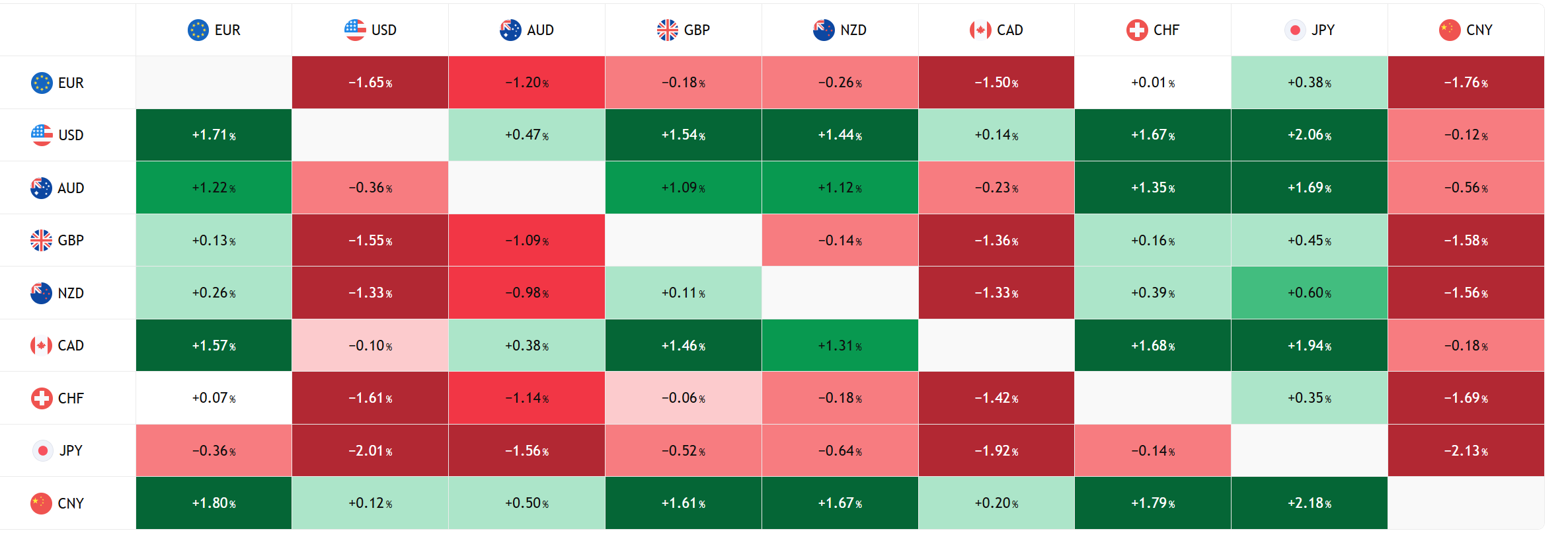
FX Heat Map (6:00 am) one week
Sources: Investing.com, Bloomberg, Reuters, Yahoo Finance, US Census Bureau, Trading Economics Tradingview