July 31, 2025
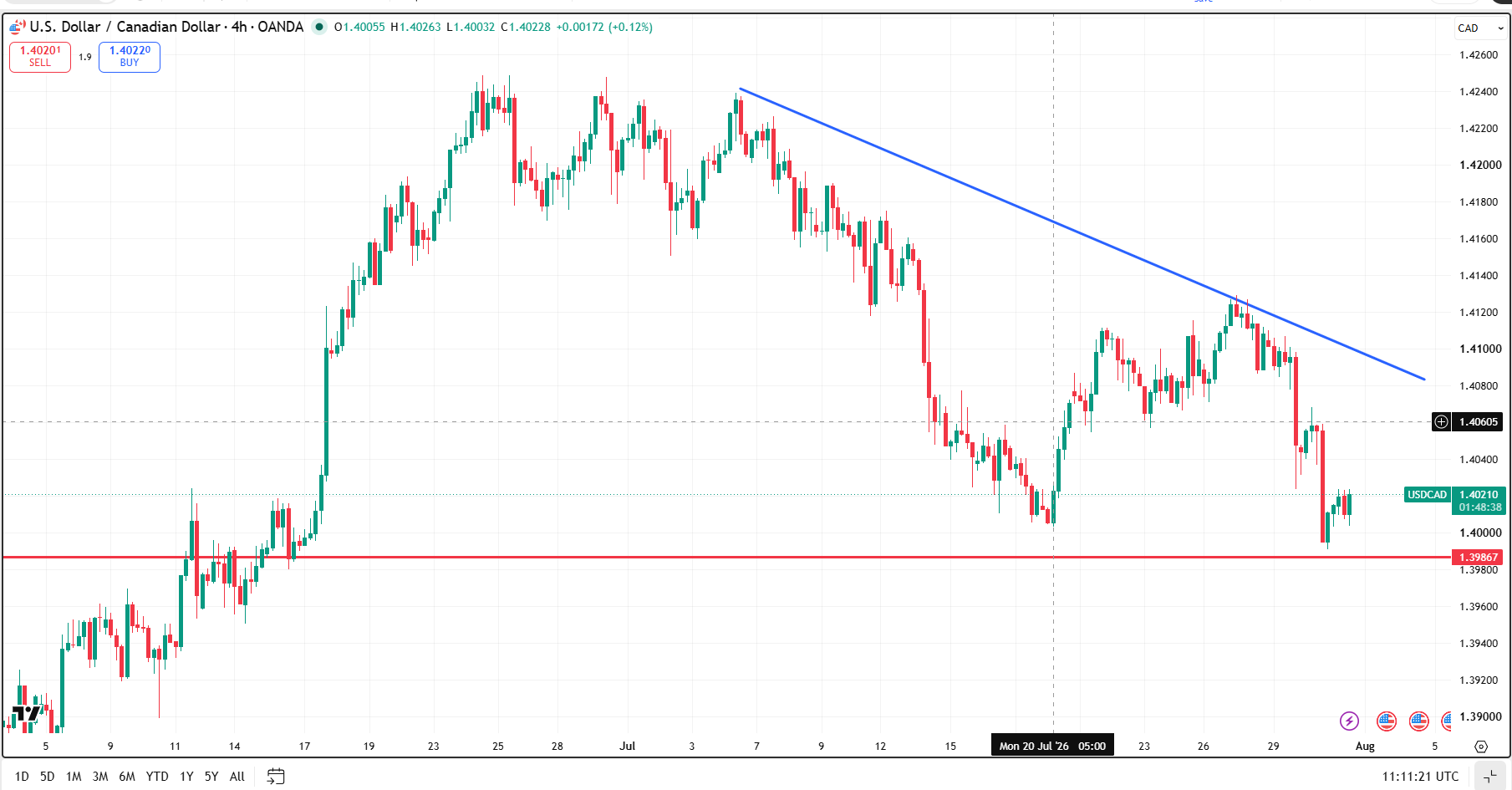
USDCAD open: 1.4016, overnight range 1.4003-1.4050, close 1.4013
USDCAD is consolidated in a tight band overnight then bounced toward resistance in the wake of the US Employment Cost Index report.
Canada’s economy grew 0.3% in May, following an upwardly revised 0.6% gain in April. On the surface, two consecutive months of growth looks encouraging, however growth has slowed each month. Statistics Canada’s advance estimate points to another soft gain in June.
Energy remained the primary driver, helped by stronger oil sector activity, while wholesale trade and manufacturing, two sectors that depend heavily on US demand, were already weakening.
That is why today’s GDP report matters less than yesterday’s tariff headlines. The data only captures activity through May, before President Trump’s latest tariffs became a factor. Markets are far more interested in what comes next than what already happened.
WTI traded higher in a 81.21-85.49 range and is near the top of the band in NY. Prices are likely to remain elevated into the weekend.
Todays US economic data includes the Employment Cost Index (ECI forecast 0.8%, previous 0.9%), Chicago PMI (forecast 54 vs previous 54.4) and Michigan Consumer Sentiment.
Canadian markets are closed Monday
USDCAD Technical Outlook
The intraday USDCAD technicals are bearish below 1.4070 which guards downtrend line resistance at 1.4110. A decisive break below 1.3987 (Thursday’s low) targets 1.3950, then 1.3910. Only a move above 1.4110 negates the downtrend.
Longer term, USDCAD remains capped by its broader 1.3860-1.4460 range that has contained price action since February. The 100-day moving average at 1.3900 is the next magnet on a sustained break below 1.3980.
For today, USDCAD support is at 1.3980 and 1.3950. Resistance is at 1.4060 and 1.4090.
Today’s expected range is 1.3990-1.4070
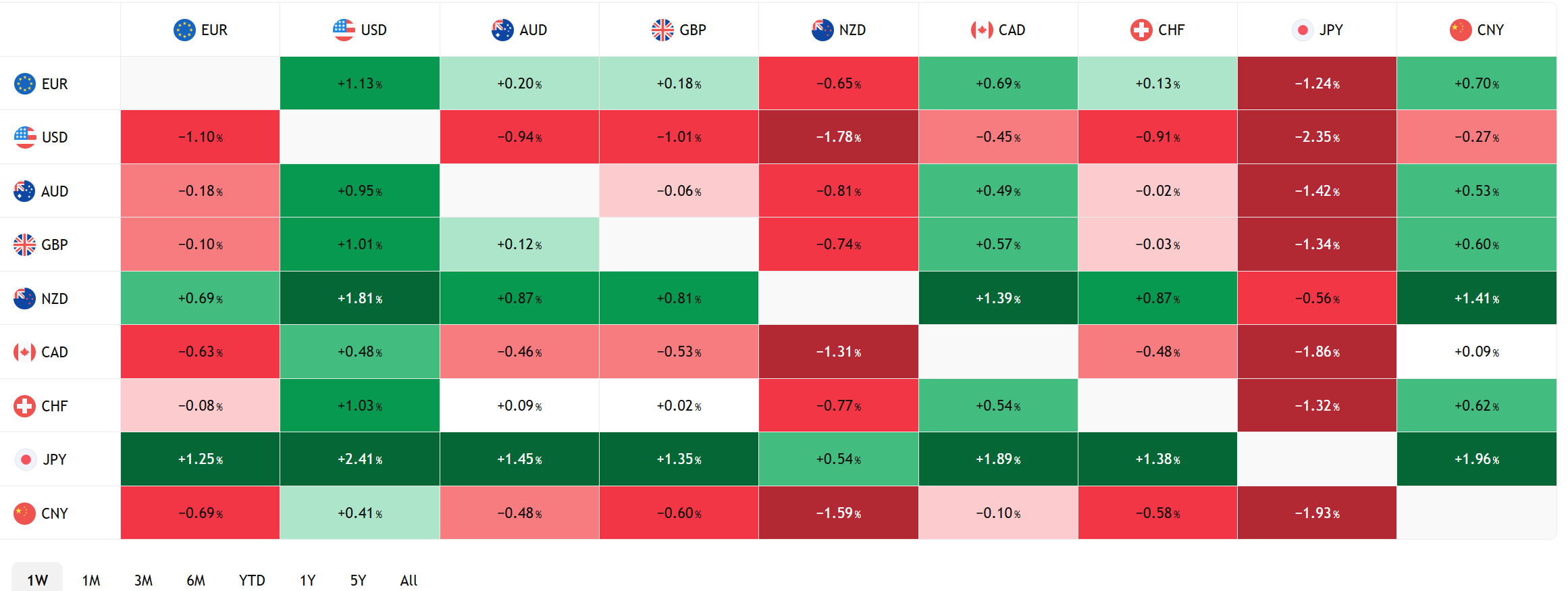
FX Heat Map
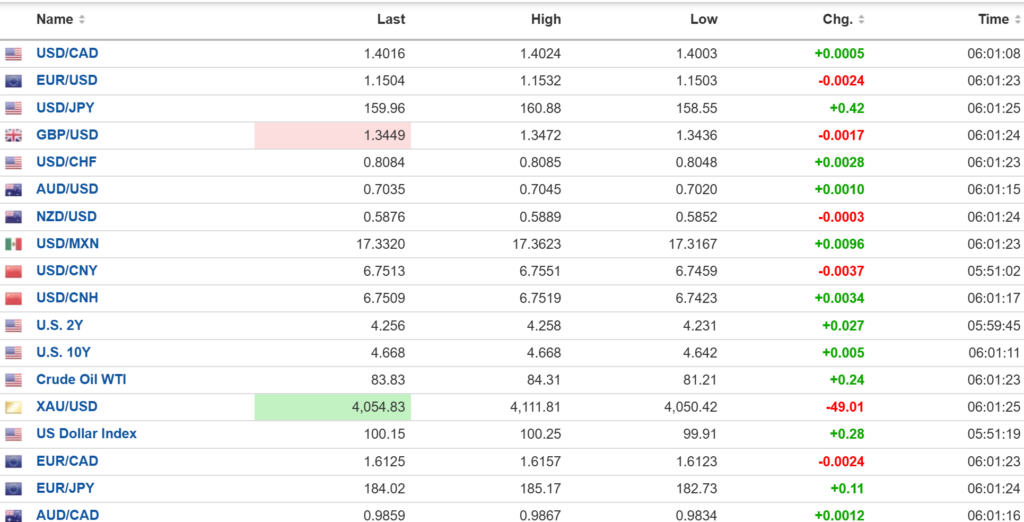
FX open high low 6:00 am
Central Bank Intervention
The Bank of Japan intervened yesterday and sold USDJPY from 163.70 to 158.79, by the time the dust settled. South Korean authorities thought it was a great idea, and they intervened to sell USDKRW as well. Neither central bank got much of a result as both currency pairs are not far from their pre-intervention levels. USDKRW has recouped nearly all its intervention losses.
Big Tech Boosts Risk Sentiment
Big Tech reversed Wednesday’s FOMC-driven selloff after Amazon and Apple reported quarterly earnings, and the Nasdaq surged 2.78%. The BoJ intervention, the drop in the US dollar index, mixed to soft US inflation numbers, and the lingering fall-out from the FOMC meeting all combined to improve global risk sentiment.
Taking Stock
Asian markets closed higher. Japan’s Topix rallied 1.22%, Hong Kong’s Hang Seng rose 0.10% and Australia’s ASX 200 gained 0.10%.
As of 5:40 am PT, the French CAC-40 is up 0.81%, the German Dax has gained 0.26% and the UK FTSE 100 is up 0.22%. S&P 500 futures are up 0.16%, the 10-year Treasury yield is 4.70%, the DXY is 100.37 and gold is 4,044.09.
EURUSD | Range 1.1484-1.1532
EURUSD extended its post-FOMC rally yesterday, then retreated into the NY session. Eurozone July inflation was 0.2% compared to -0.1% in June and 2.9% y/y (forecast 2.9%) while the German unemployment rate was 6.4% vs forecast 6.3%. The results did not leave a mark as a September ECB hike is priced in. A decisive break above 1.1550 targets 1.1700.
GBPUSD | Range 1.3415-1.3472
Sterling had a topsy-turvy overnight session and made a new session low in NY. GBPUSD is seeing some support from broad US dollar weakness but gains are hampered due to downgraded risks for the Bank of England to raise rates in September. That’s because Governor Bailey said “Inflation persistence may be weaker than presumed.” GBPUSD technicals are bearish while prices are below the 1.3500-20 area.
USDJPY | Range 158.55-160.88
USDJPY is clawing back losses in the wake of Thursday’s BoJ intervention and the BoJ decision to leave rates unchanged (as expected) at 1.00%. The lone dissenter, Hajime Takata, argued for a 25-basis-point rate hike. Governor Kazuo Ueda warned that policymakers need to pay closer attention to upside inflation risks.
AUDUSD | Range 0.7009-0.7044
AUDUSD hung on to yesterday’s gains and traded choppily due to general US dollar weakness, and the ripple effect from the BoJ intervention in yen. The improved risk sentiment from the tech stock rebound sentiment also underpinned prices.
USDMXN | Range 17.3167-17.3761
USDMXN traded defensively due to general US dollar weakness and yesterday’s better-than-expected Mexican growth numbers. Q2 GDP rose 2.2% y/y (forecast 1.5%). The economic growth story reduces the need for Banxico to trim interest rates any time soon.
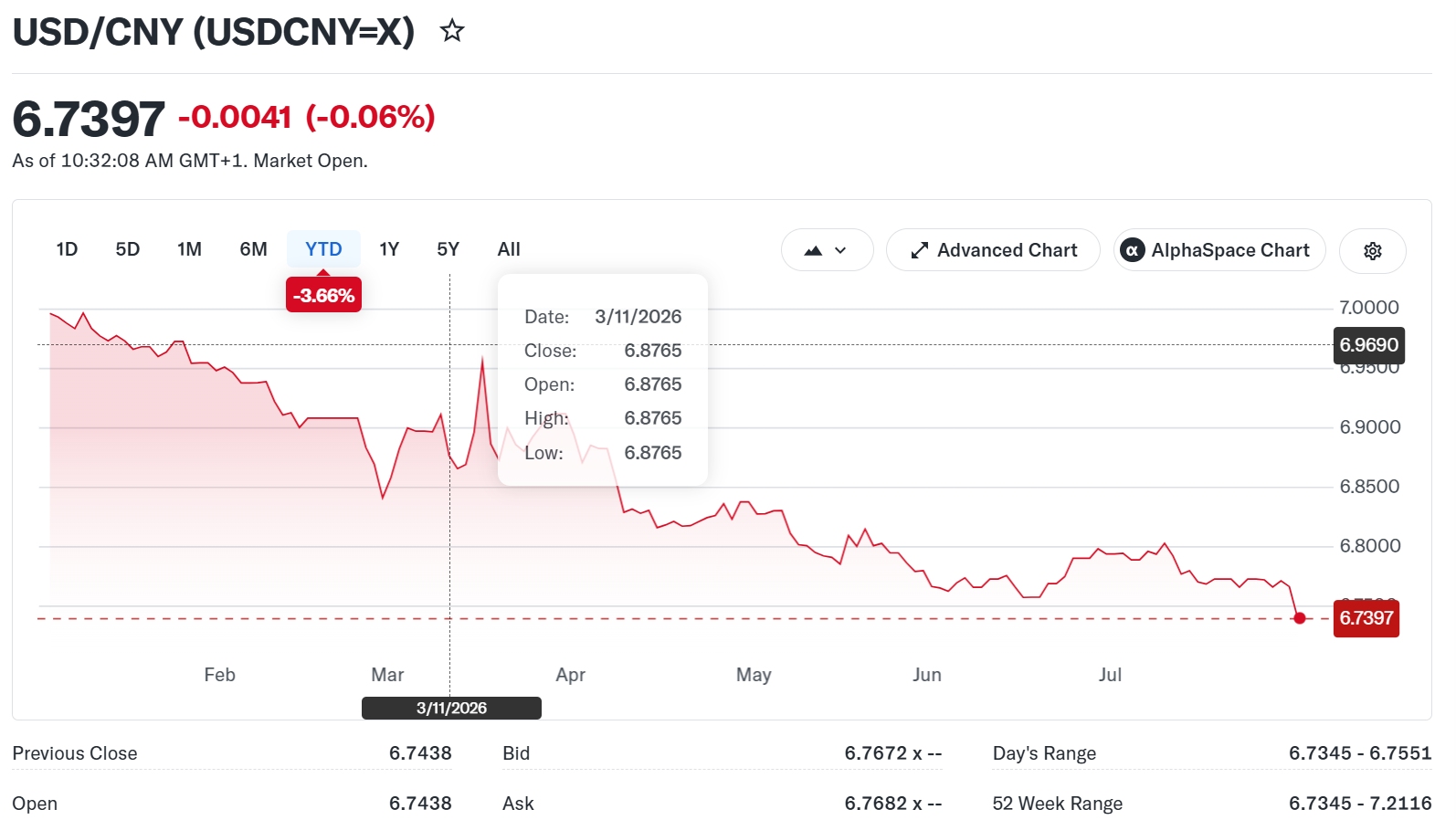
CHINA
- PBoC Fix: 6.7892 vs (prev. 6.7899)
- Shanghai Shenzhen CSI 300 rose 0.25% to 4,588.20 (down 7.44% for July)
China July NBS Manufacturing PMI 49.2 (forecast 50, June 50.3), Non-manufacturing PMI 49 (previous 50, June 50.3).
China’s latest PMI data painted a picture of an economy struggling to regain momentum. Beijing acknowledged the slowdown, with the Politburo promising additional policy support and President Xi Jinping conceding the economy is facing headwinds.
Sources: Investing.com, Bloomberg, Reuters, Yahoo Finance, US Census Bureau, Trading Economics, Tradingview